When the ground under a building is dirty: soil vapor and what mitigation does
You can have a clean-looking building on top of impacted ground. Vapor is how the ground reaches the indoor air.
October 27, 2026 · 3 min read
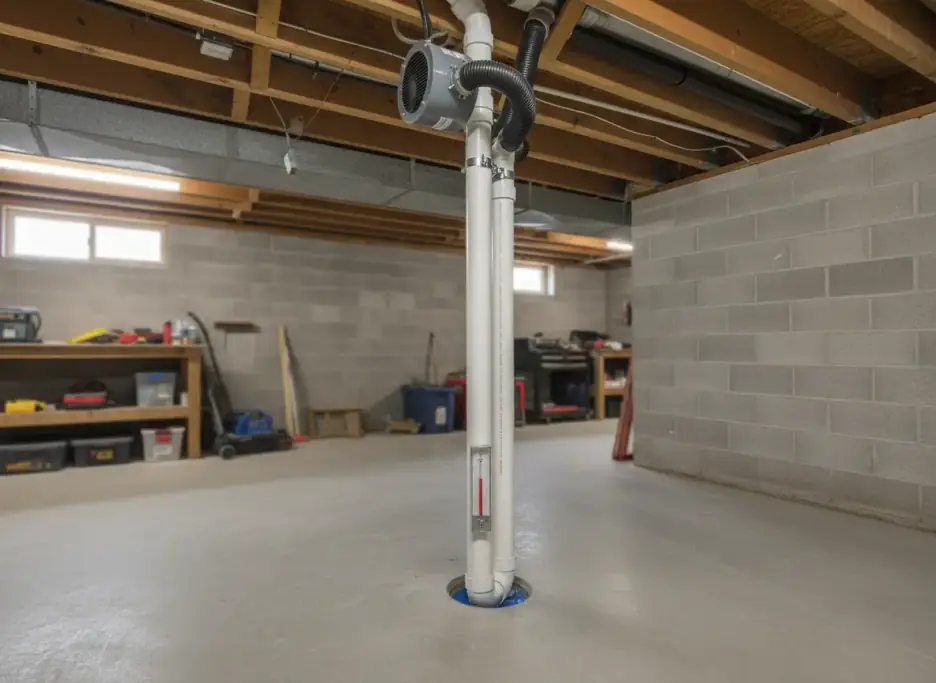
Most people picture contamination as something you can see, like a stained patch of dirt or a leaking drum. Soil vapor is the version you cannot. When certain contaminants sit in the soil or groundwater under a property, some of what they contain can turn into vapor and move through the pore space in the ground. A building sitting on that ground can pull some of it in.
This comes up in practice more often than owners expect, especially on properties with a past: former filling stations, dry cleaners, machine shops, and anywhere solvents or petroleum products were handled. It is also one reason a Phase One environmental site assessment looks so closely at what happened on and around a property.
How vapor gets inside
A concrete slab looks solid, but it is not sealed. Vapor can follow cracks, control joints, gaps around utility lines, sumps, floor drains and the seam where the slab meets the footing. Buildings also tend to run at slightly lower pressure than the soil beneath them, especially in winter when heated air rises and leaves, which draws air up from below. That is why indoor air can be affected by ground that nobody has dug into in years.
Vapor is not always something you can smell. Absence of an odor is not a clean result. If a Phase One or Phase Two points to a concern, the way to find out is to test.
How the problem is investigated
A Phase Two investigation takes original samples of soil and groundwater, and that is often where a vapor concern becomes visible: the lab results show solvents or petroleum compounds under the property. From there, soil gas can be sampled directly with probes driven into the ground, or from beneath the slab inside the building, to see what is actually in the air pockets under the floor. Indoor air can be sampled too, though a single indoor sample says little by itself without the data from below.
Together those samples show whether vapor is present, where it is strongest, and whether it is reaching the occupied space.
What vapor mitigation does
Vapor mitigation protects the building. It does not remove the contamination from the ground. It interrupts the path between the ground and the people inside. Common approaches include sealing cracks and penetrations, installing a barrier under or over the slab, and creating a slightly lower pressure under the slab than above it, so air moves from the room toward the ground instead of the other way. A sub-slab system does that with a fan connected to piping that draws air from beneath the floor and vents it safely outside.
Because it addresses the building rather than the source, mitigation works in places where digging up the contamination is impractical, like beneath an occupied warehouse. Indevcon lists vapor mitigation as one of its site remediation services.
Mitigation and cleanup are two jobs
Cleanup goes after the source. The remediation options on Indevcon's list that deal with vapors in the ground include soil vapor extraction, which pulls vapors out of the soil through wells and treats them, air sparging, which injects air below the water table to carry contaminants upward where they can be captured, multi-phase extraction, and chemical oxidation. Which of these suits a property depends on the contaminant, the soil and the depth of the groundwater.
On many sites the two run side by side. A mitigation system protects the people in the building today while a cleanup lowers the source over time. A well-designed project sets out which job does what, and how you will know that each one is working.
Proof, not assumptions
A mitigation system is only worth installing if you can show it is working. After it goes in, the sensible next step is testing again. Fans need to keep running, and someone should check them. If the building changes, with a new addition, a new slab or a different use, the plan should be revisited.
Who this matters to
- Buyers of older commercial and industrial buildings with a documented past
- Owners who have received a Phase Two report that mentions solvents or petroleum under the slab
- Lenders, bankers and investors who need to understand a site before they commit
- Agents and brokers whose deal has stalled on an environmental finding
Requirements for vapor testing and mitigation differ by property and by situation, so ask about the requirements for yours. To talk through a specific building, call Glenn at (815) 758-6896 for a free estimate.
Indevcon Inc., (815) 758-6896
Call (815) 758-6896More articles
Before you close: what a Phase One environmental assessment actually reads
A Phase One is mostly reading, asking and walking the property. Here is what goes into it and what it tells you.
A musty basement or a damp attic: what mold testing measures, and why the water matters more
You can scrub a stain away in an afternoon. If the water that fed it is still there, the stain returns.